 (1).png)
Bioinformatics System
“Data Driven Insights for Better Health”
“Data Driven Insights for Better Health”
A Bioinformatics Management & Information System (BMIS) is an all-in-one software solution crafted to make the storage, analysis, and management of biological and clinical data a breeze. As the fields of genomics, proteomics, and molecular biology continue to expand rapidly, organizations are in need of sophisticated tools that facilitate efficient data handling, secure information management, and robust analytics to foster innovation and discovery.
Keep all your massive datasets—like genomic, proteomic, and clinical data—organized and accessible in one unified platform. This setup guarantees easy access and structured storage, making research operations run smoothly.
Tackle complex tasks such as sequence alignment, gene expression profiling, protein modeling, and molecular simulations with AI-powered bioinformatics software that delivers accurate results faster than ever.
Stay compliant with HIPAA, GDPR, and industry standards through encrypted storage, role-based access control, and secure audit trails, ensuring that sensitive biological and clinical data is well protected.
Easily integrate with LIMS (Laboratory Information Management Systems), Electronic Health Records (EHR), and scientific research databases, creating smooth and efficient workflows.
Utilize AI and machine learning algorithms to spot patterns, predict outcomes, and drive progress in drug discovery, genetic research, and personalized medicine.
Access, share, and analyze biological data from anywhere, at any time, thanks to a cloud-based bioinformatics system that supports scalability and fosters remote collaboration among global research teams.
Sequence analysis tools in bioinformatics are computational methods used to study DNA, RNA, and protein sequences. They empower researchers to:
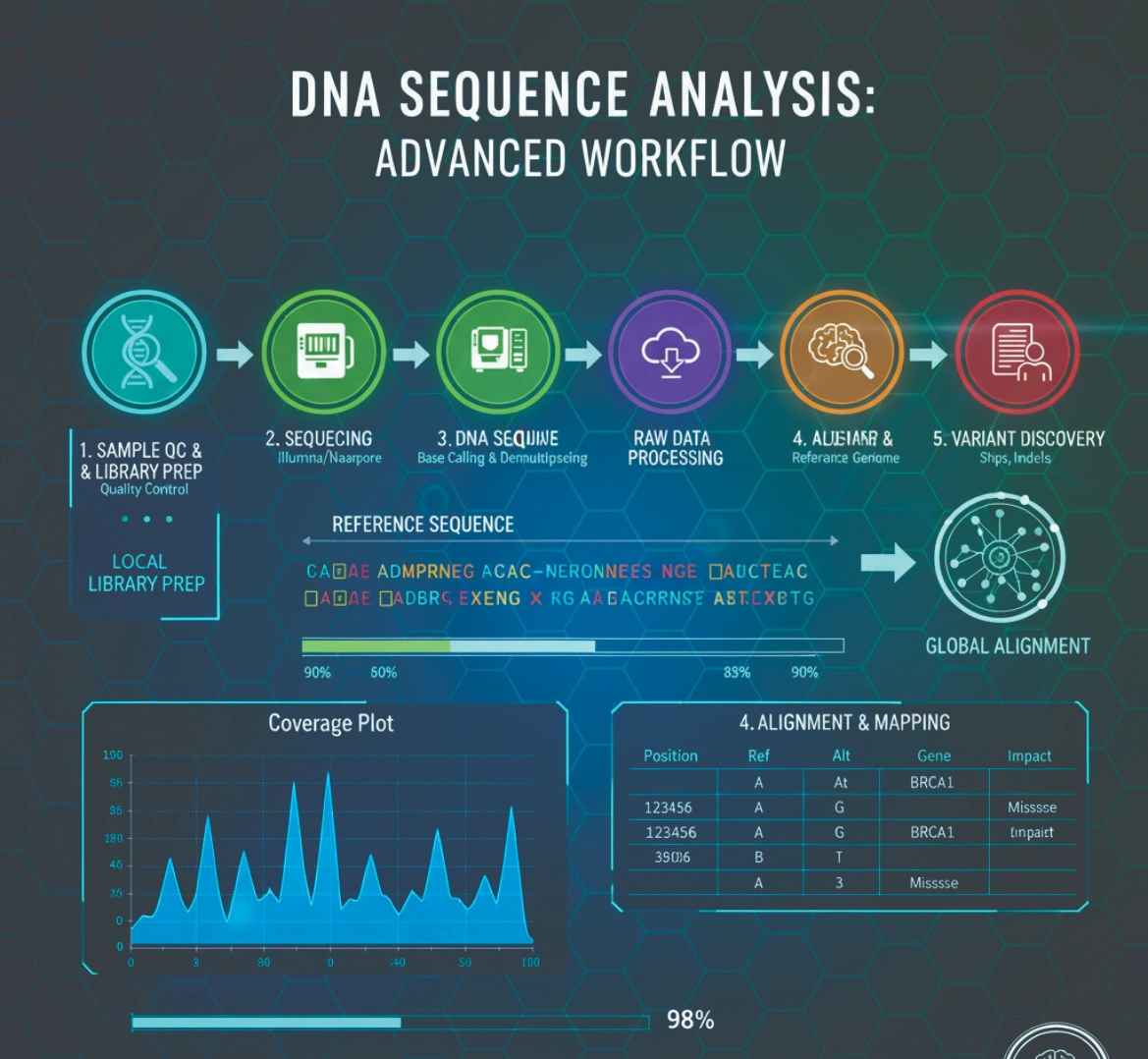
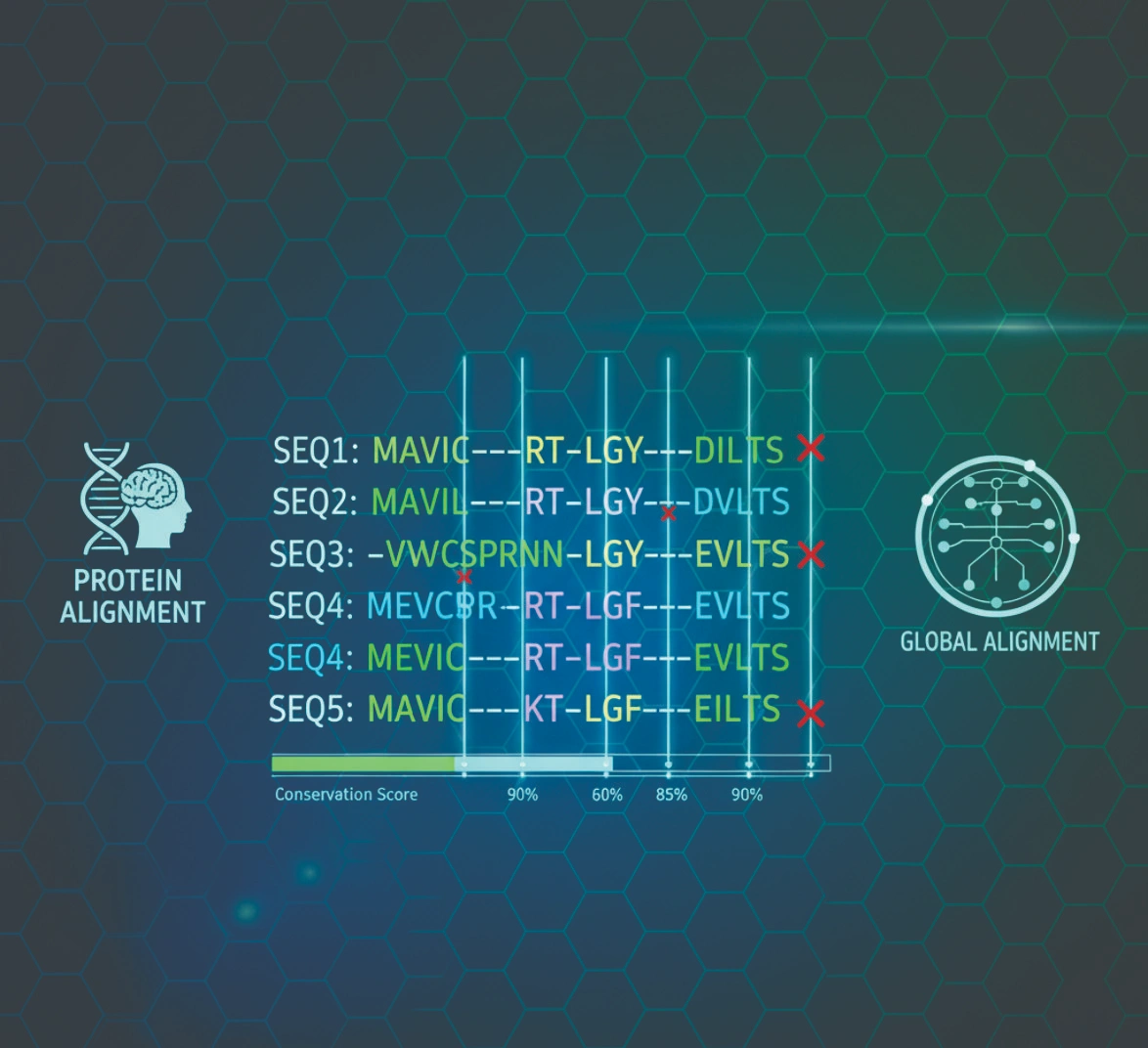
Sequence alignment arranges DNA, RNA, or protein sequences to uncover evolutionary, structural, and functional similarities.
Aligns 3+ sequences to detect conserved regions.
Tools: ClustalW, MUSCLE, MAFFT
Matches query sequences against databases like BLAST & FASTA to identify homologs, gene functions, and evolutionary links.
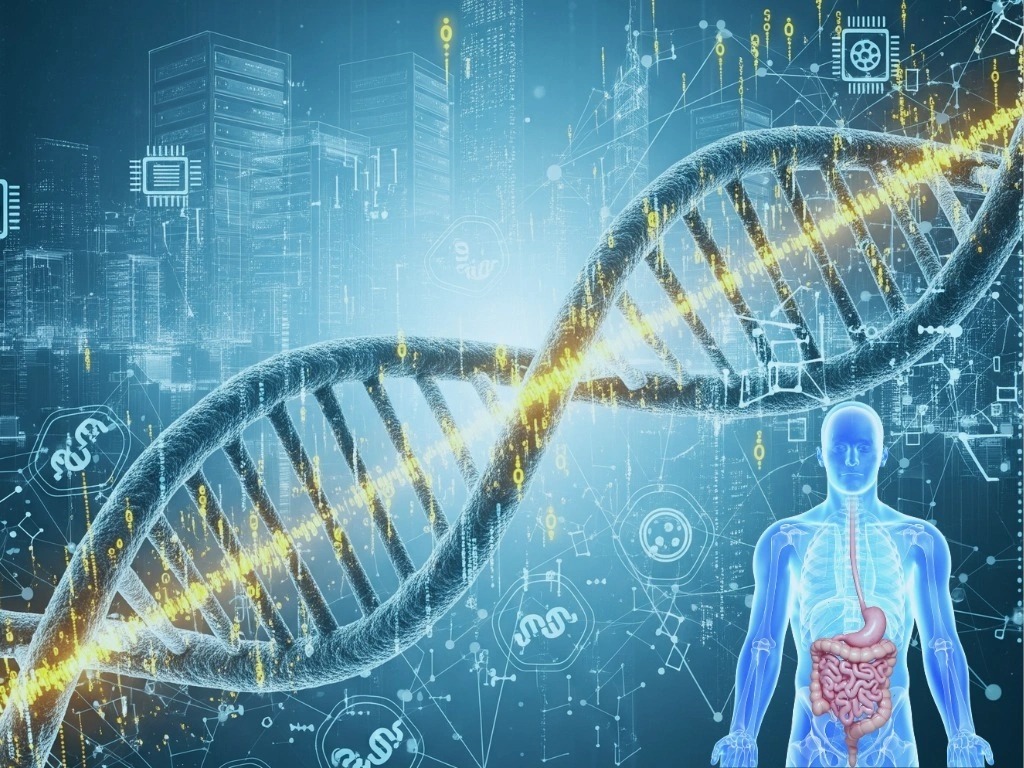
Store, organize, and process massive datasets like genome sequences and protein structures.
Integrate research data, clinical trials, and lab information into one powerful system.
Leverage AI & ML for predictions, drug discovery, and bioinformatics research advancements.
AI-assisted analysis speeds up scientific discoveries.
Robust security ensures data integrity & confidentiality.
Advanced dashboards bring clarity to complex datasets.
Seamless teamwork with cloud-based integrations.
Our BIMS system gathers academic, administrative, and student information from multiple sources into a single platform.
Automated modules process the data, removing redundancies and ensuring smooth workflow across departments.
Faculty, students, and administrators get role-based access, ensuring transparency and real-time information sharing.
The system generates detailed reports, analytics, and insights to help institutions make smarter decisions.
BMIS is a platform for managing and analyzing biological data with AI tools.
Researchers, pharma companies, universities, and healthcare institutes.
Yes, BMIS fully integrates with cloud services for collaboration.